Gear
The Ultimate Kalalau Trail Packing List
The relentless mud, steep switchbacks, and exposed cliff faces of the Nāpali Coast will punish anyone carrying an oversized pack. When it comes to staging your gear layout for Kalalau, the golden rule is simple: Pack light, pack smart, and prepare for rain. > Below is our comprehensive, field-tested wilderness kit breakdown, structured to help you balance remote self-sufficiency with ultralight mobility.
🏆 The Smarter Way: Rent Your Gear & Store Your Luggage
Flying across the Pacific with bulky backpacking packs, heavy tents, and oversized sleeping pads is an expensive hassle that jacks up airline baggage fees. Furthermore, every single backpacker faces the exact same problem: What do I do with my standard vacation suitcases and valuables while I’m deep in the wilderness?
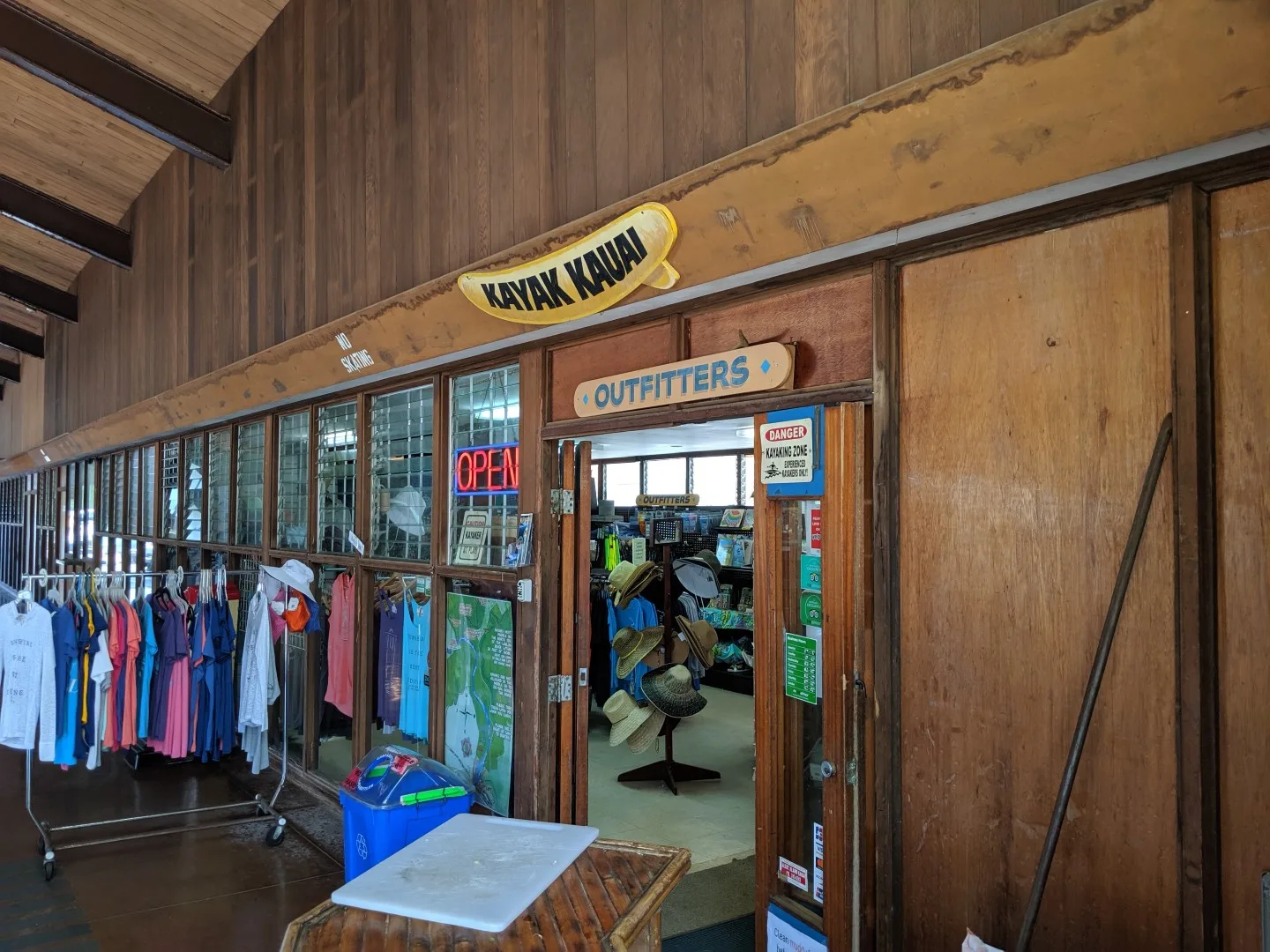
For the past 15 years, our official on-island partner, Kayak Kauai, has provided the ultimate all-in-one solution for Kalalau trail staging:
-
Premium Backpacking Rentals: Save yourself the airport hassle. Micco at Kayak Kauai rents complete, field-ready wilderness kits perfectly suited for Kauaʻi’s unique tropical terrain—including lightweight backpacks, tents, sleeping bags, and pads.
-
Secure Luggage Storage: Hike with peace of mind. He provides dedicated, secure storage for your non-hiking vacation clothing, luggage, and valuables so they aren’t left vulnerable in a rental car or public parking area.
📧 Secure Your Staging Today
Space and gear allocations are limited, especially during peak hiking seasons. Contact Micco directly to coordinate your rental kit and lock in your luggage storage slot:
🚨 The Airplane Fuel Trap
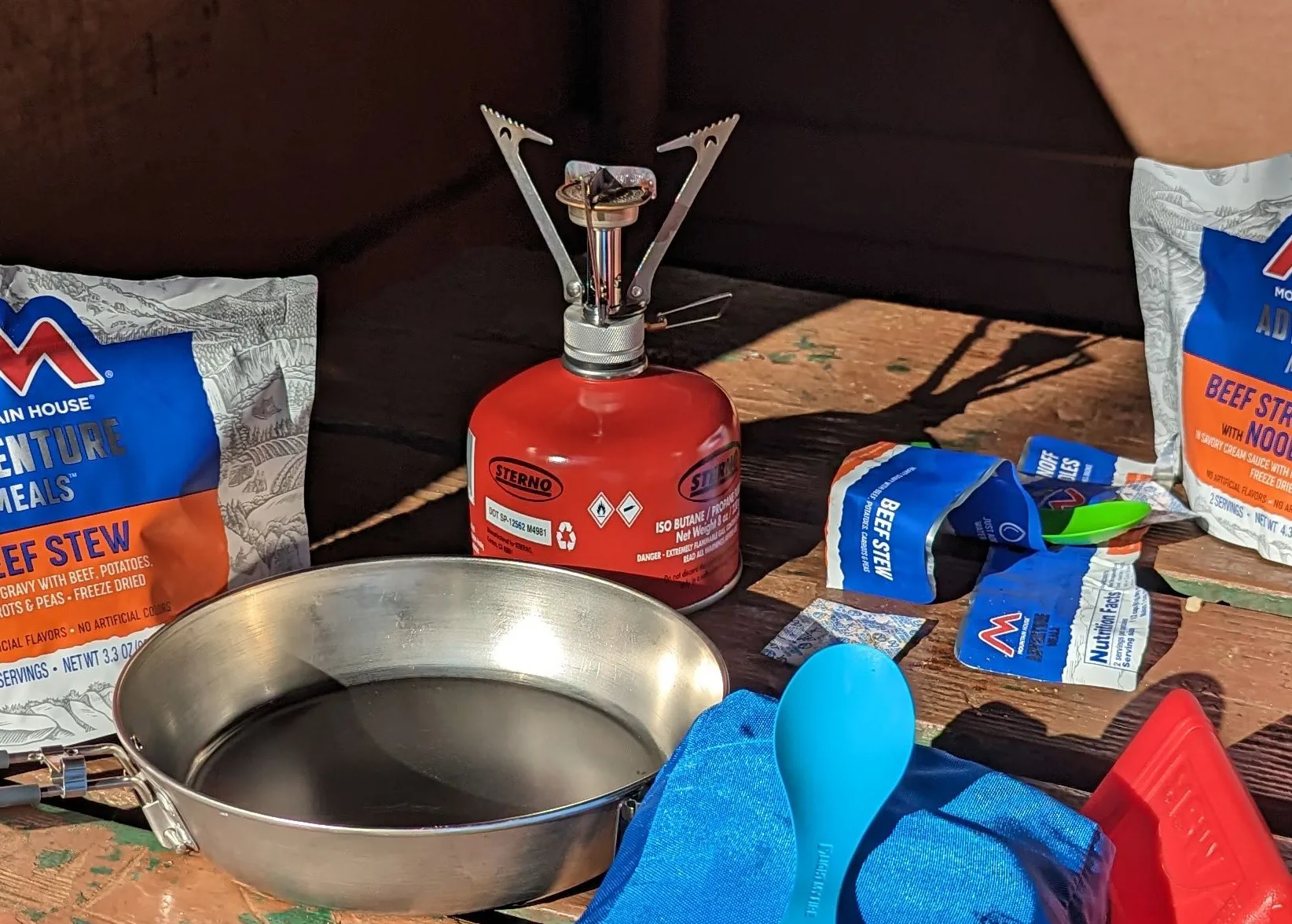
Remember that commercial airlines and TSA strictly prohibit flying with pressurized camp stove fuel canisters in both checked and carry-on luggage. Even if you bring your own stove, you must buy your fuel on-island. Ensure your arrival timeline coordinates with local North Shore hardware stores or gear hubs so you can grab your fuel before heading to Hāʻena!
The Essential Backpacking Kit
The golden rule of tropical backpacking is to never pack cotton. Cotton acts like a sponge, traps moisture, and will rot or cause severe chafing on your body. Stick strictly to high-quality synthetics, nylon, or lightweight merino wool. I wear an active set of clothing and pack an emergency dry set of clothing in a zip-lock. That’s my complete trail wardrobe. More items listed below:
Footwear & Trail Staples
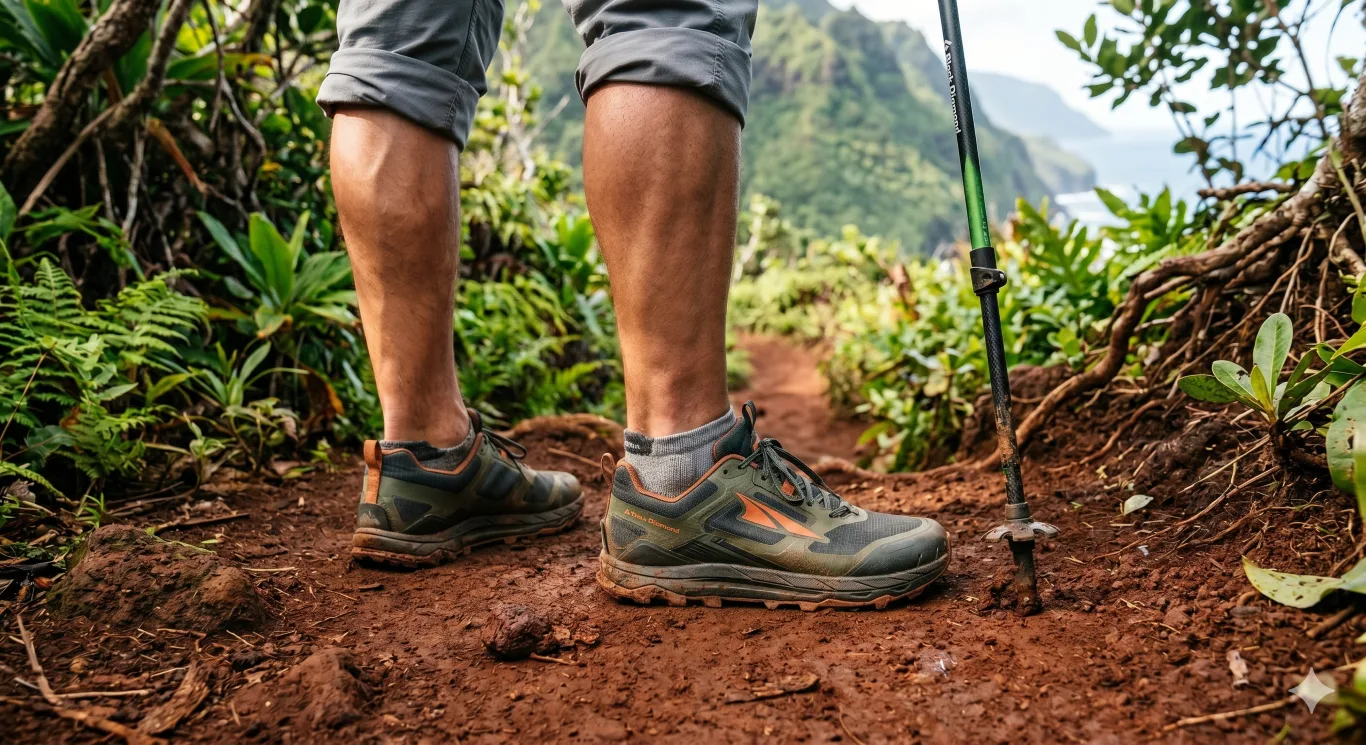
The trail is notoriously slick, clay-heavy, and steep. Your footwear choices dictate your stability.
-
Trail Runners or Hiking Sandals: Prioritize breathable shoes featuring aggressive, deep lug patterns for slick mud.
-
Trekking Poles: An absolute mandatory item. They protect your knees on steep drops and save your balance on muddy slopes.
-
Ultralight Backpack: A durable 45L to 55L pack fitted with a waterproof rain cover.
-
Satellite Communicator: A compact GPS device (like a Garmin inReach) for remote emergency SOS tracking where cell service fails.
Shelter & Sleep System
Kauaʻi’s weather is volatile. Even during summer, high-volume downpours can strike overnight.
-
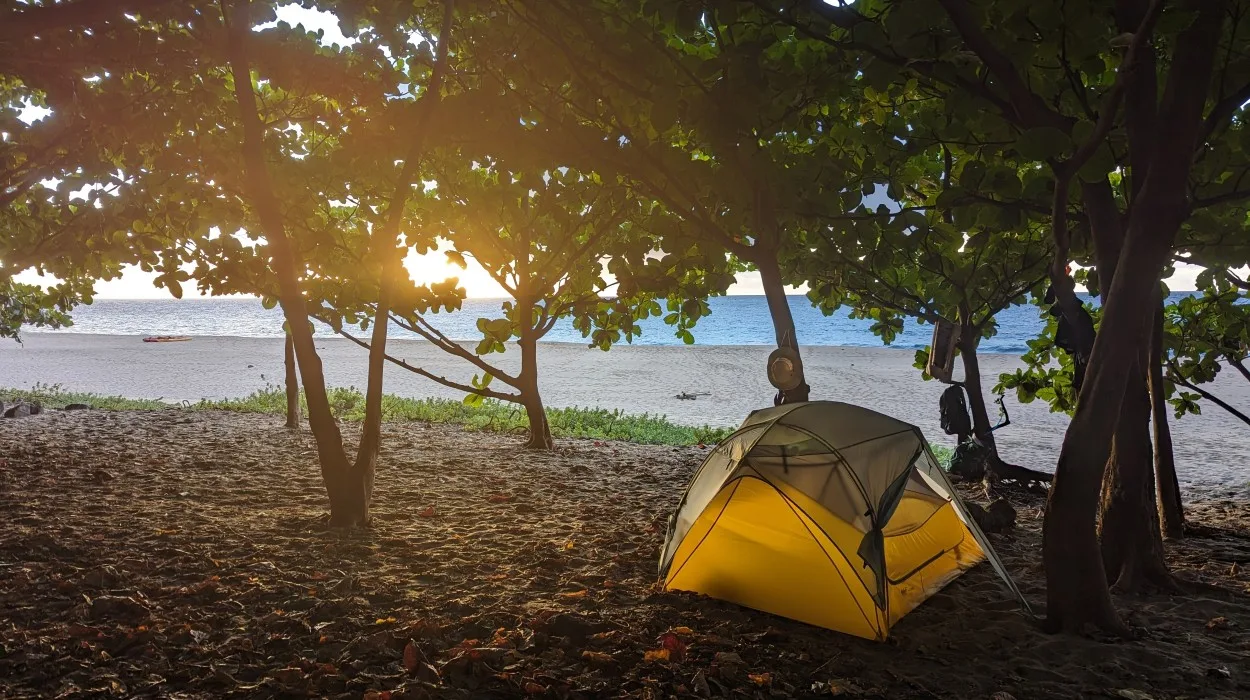
Lightweight Tent or Hammock: Ensure your shelter has a fully taped rainfly and solid stakes for sand/mud.
-
Ultralight Sleeping Bag or Liner: The valleys are tropical but humid; a lightweight quilt rated to 50°F is usually perfect.
-
Sleeping Pad: Provides necessary insulation and comfort on hard valley dirt or sand.
-
Headlamp & Power Bank: Bring a bright, rechargeable headlamp and a sealed portable charger block to keep your phone/camera alive.
Kitchen, Fuel & Hydration
Total self-sufficiency requires a clean, streamlined cooking and water treatment strategy.
-
Water Filter or SteriPen: High-capacity filters are vital. Backwash your filters frequently, as fine mountain silt can clog them up. or
-
Compact Backpacking Stove: A lightweight screw-on burner with integrated aluminum pot.
-
Dehydrated Meals & High-Calorie Snacks: Focus on lightweight, nutrient-dense calories (bars, nuts, freeze-dried bags).
-
Pack-Out Trash Bags: You must pack out every single scrap of trash you bring in.
Personal Care & Hygiene
First Aid & Medical
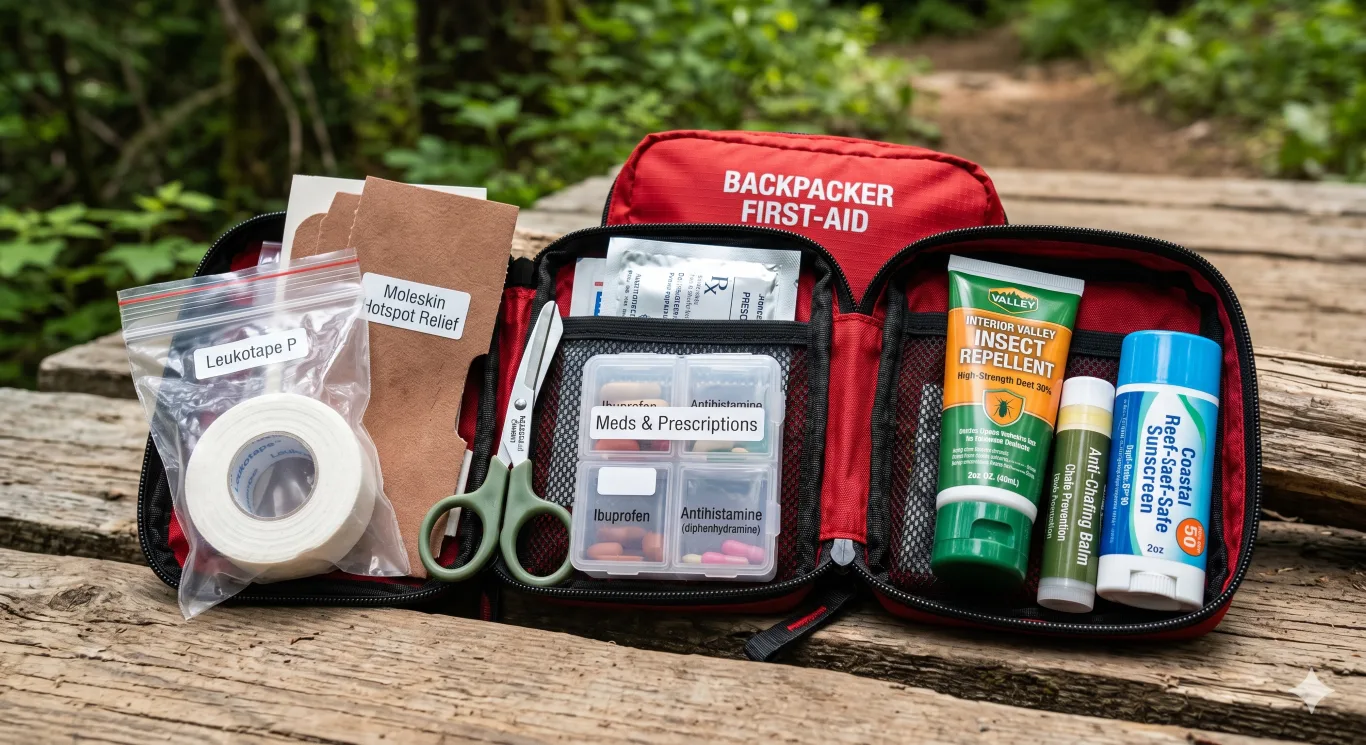
Carry a First Aid kit of some type.
-
Blister Kit: Pack ample Leukotape, Moleskin, and medical shears.
-
Insect Repellent & Sunscreen: High-strength bug spray for interior valley mosquitoes and reef-safe sunscreen for the coast.
-
Chafing Prevention: Anti-chafing balm is crucial for long, humid miles in damp clothes.
-
Basic Meds: Ibuprofen, antihistamines, and personal prescriptions.
Personal Hygiene
-
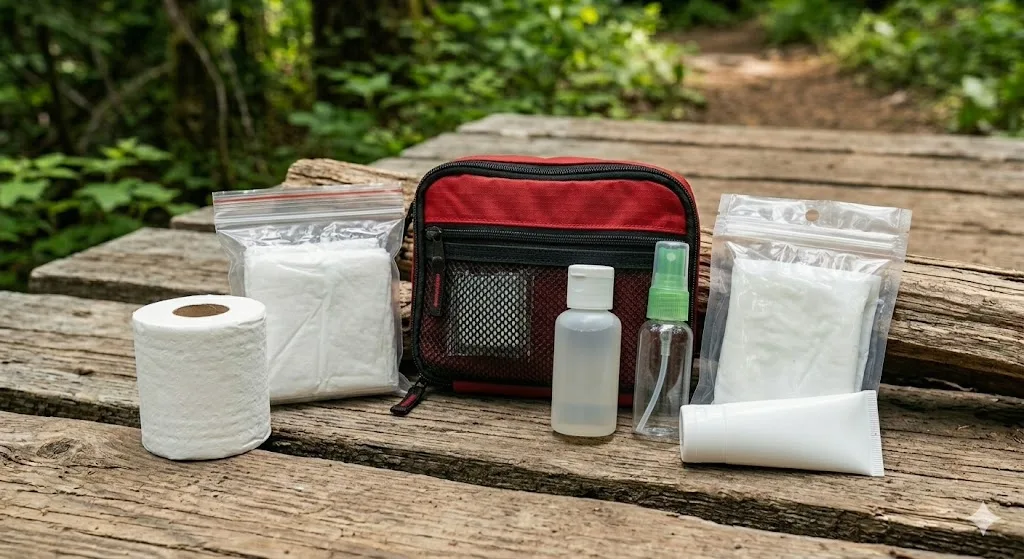
Toilet Paper & Trowel: If compost toilets are full or unavailable, you must bury human waste 6–8 inches deep, at least 200 feet away from water sources.
- Toothbrush/Paste, Bug Deterant, Feminine Products
-
Biodegradable Soap & Deoderant: Never use soap directly inside streams—even biodegradable formulas require filtering through soil to break down safely.
-
Wet Wipes & Sanitizer: Ideal for quick end-of-day trail washes.
Other Possibilities
Don’t bring too much! You don’t want an overweight bag. If you need to bring more, here are a few more possible items.
Around Camp
- Book
- Camp Lamp
- Small Musical Instrument
- Lightweight Camping Chair/Table
- Sunglasses
- Swimsuit
- Towel
Cooking Gear
- Lighter
- Cutlery
- Bowls/Cups
- Pocket Knife
- Salt/Pepper
Just in Case
- Camping Pillow
- Duct Tape
- Bug Spray
- Pocket Knife
- Compass/GPS
- Whistle