
Kalalau Trail Safety Briefing & Hazards Guide
The Kalalau Trail is an intensely beautiful, world-class wilderness corridor, but it is also exceptionally hazardous. State data tracks dozens of injuries, hundreds of emergency helicopter extractions, and over 60 confirmed deaths across the trail and its adjacent coastlines.
This is a dynamic, remote ecosystem where mistakes can be fatal. True safety requires recognizing that nature holds the upper hand here. By respecting your personal physical limits, monitoring real-time weather gauges, and understanding the core hazards below, you can safely navigate the Nāpali Coast.
Volatile Flash Floods
(The Leading Stranding Hazard)
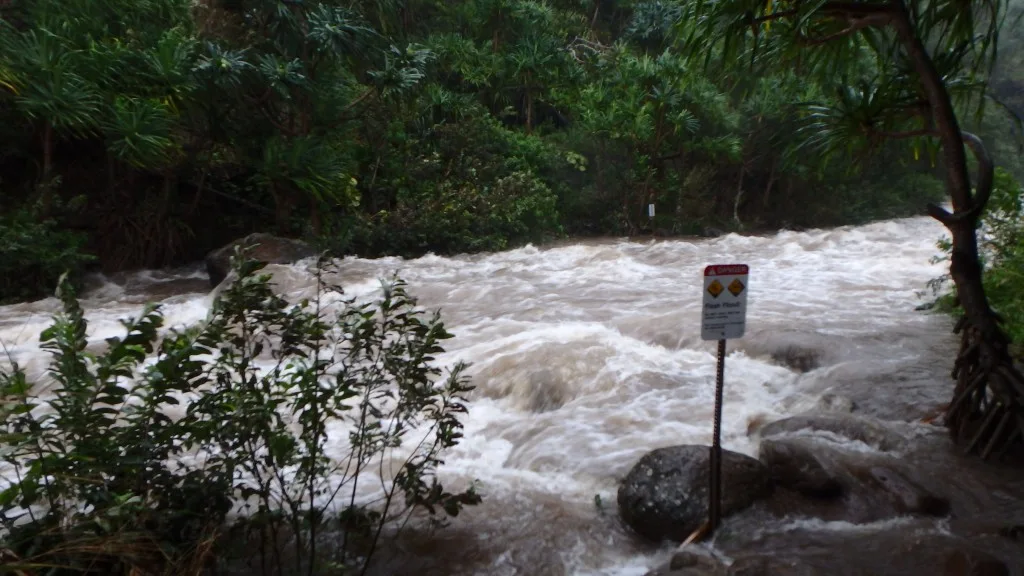
The trail crosses three major river arteries: Hanakāpīʻai Stream (Mile 2), Hanakoa Stream (Mile 6), and Kalalau Stream (Mile 11). Heavy rainfall miles upstream in the mountain watersheds can send a sudden, raging wall of brown mud and debris down the valley with zero warning at the coast.
-
The Survival Protocol: Never attempt to cross a stream if the water is rushing fiercely, murky/brown, or climbing above your knees. If a flash flood traps you on the far side of a stream, do not panic and do not try to cross. Stay on high ground, shelter in place, and wait. The water levels typically recede back to safe parameters within 2 to 4 hours after the rain stops.
Sheer Cliffs & Crawler’s Ledge
(Miles 6 – 7)
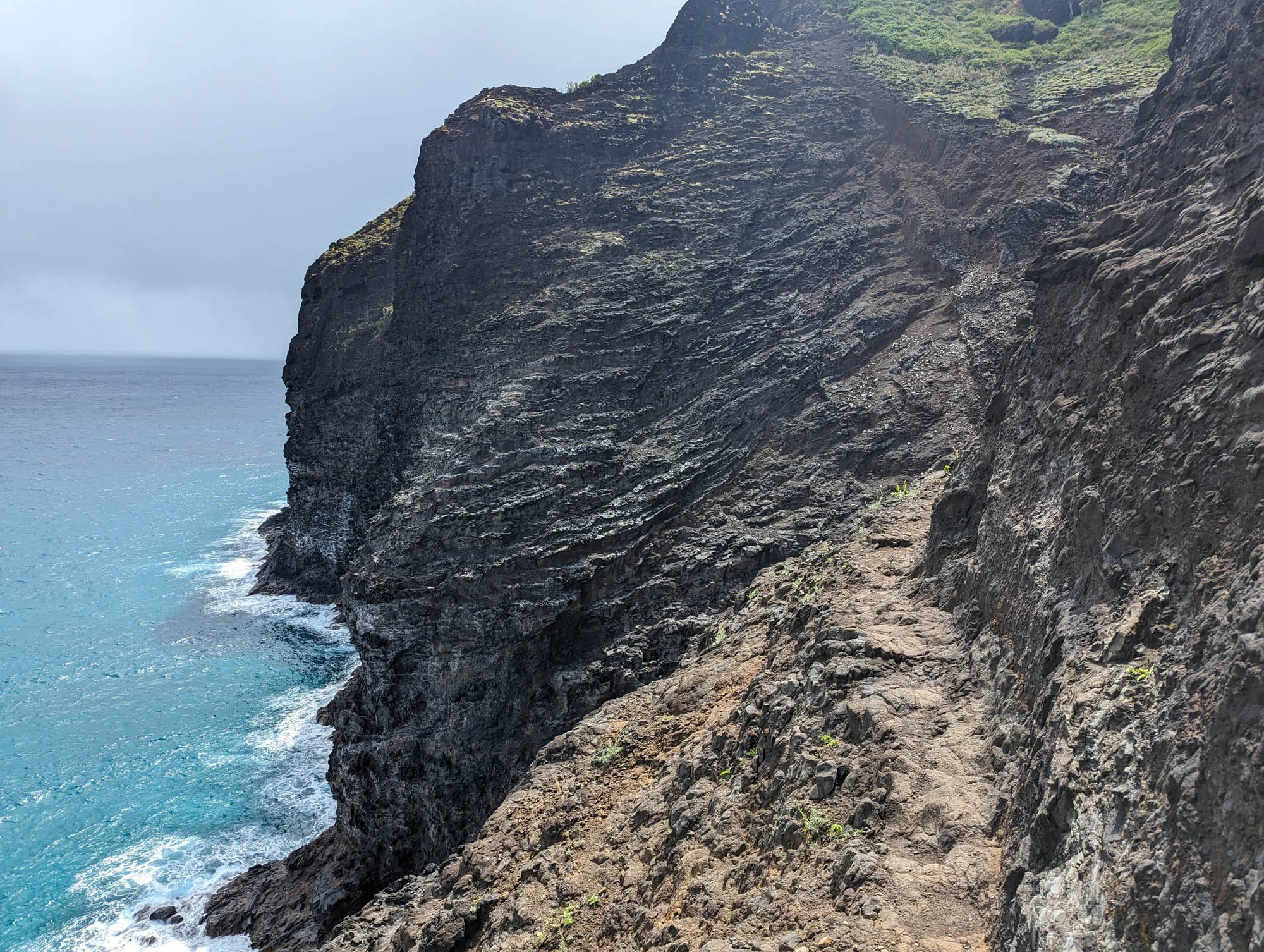
The central miles of the trail carve across crumbling volcanic rock faces hundreds of feet directly above the Pacific Ocean. The most infamous section, Crawler’s Ledge, features a narrow, 2-foot-wide path exposed to severe, unshielded ocean gusts. Falling rock from the cliffs above is an ongoing risk.
-
The Survival Protocol: Take slow, deliberate steps and maintain a low center of gravity. If your heavy backpacking pack is catching on the mountain walls, unclip your chest/waist straps slightly so you can maneuver. Never attempt Crawler’s Ledge during active rain storms, heavy fog, or high winds which turn the slick red clay into ice.
Deadly Shorebreaks and Rip Currents
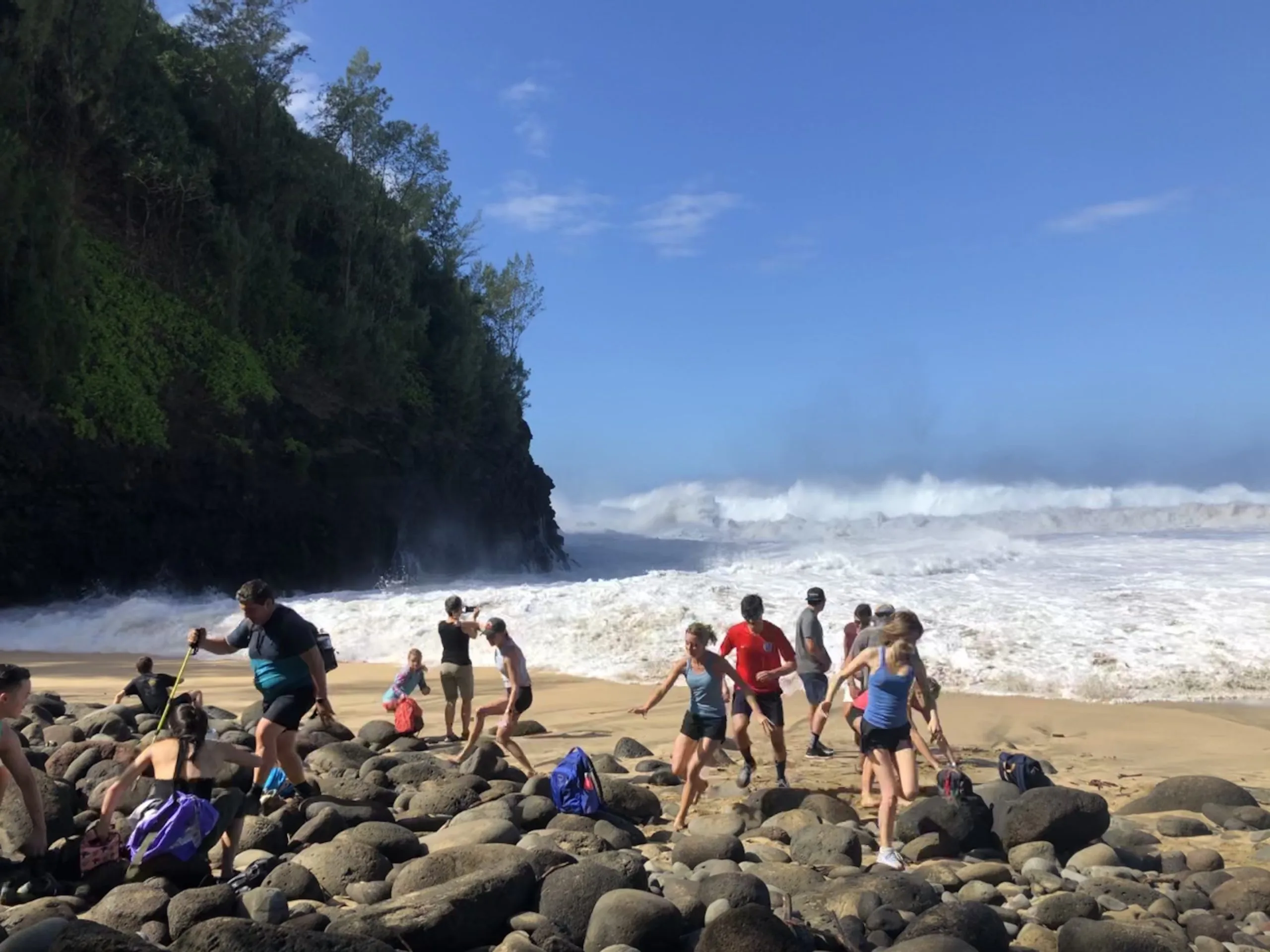
Hanakāpīʻai Beach and Kalalau Beach have collectively claimed dozens of lives. These remote shorelines feature invisible, powerful rip currents and crushing shorebreaks with absolutely zero lifeguards. The warning sign at Hanakāpīʻai tracks a tragic, rising death toll of bystanders swept off the sand by rogue waves.
-
The Survival Protocol: Entering the ocean at Hanakāpīʻai Beach is a zero-tolerance danger year-round. Only experience the water during the calm summer window (May–September) at Kēʻē Beach or the safe sand lines of Kalalau, and never turn your back on the ocean.
Heat Exhaustion and Physical Conditioning
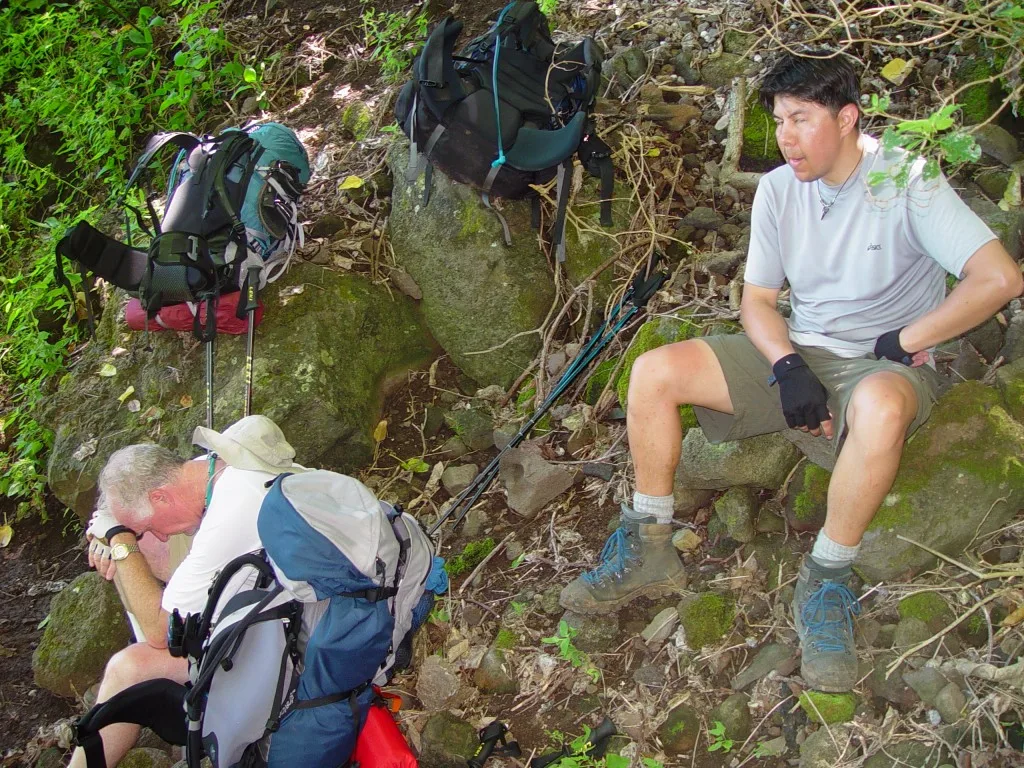
Many search-and-rescue dispatches are not dramatic falls, but rather physical failures. The trail features a grueling, cumulative 5,000+ vertical feet of relentless up-and-down climbing. Combining a heavy 40-pound backpack with direct tropical sun exposure leads rapidly to heat exhaustion, severe dehydration, or muscle failure.
-
The Survival Protocol: Pace yourself and treat this hike like a marathon, not a race. Pack a minimum of 3 to 4 liters of water for the trek, carry an advanced water filter or treatment tablets to guard against Leptospirosis in the streams, and never hike without high-traction footwear.
Emergency Services & Rescue Reality
-
📱 Absolute No Cell Service: There is zero cellular coverage along the entirety of the 11-mile Nāpali Coastline. If you break an ankle, suffer an illness, or get stranded by a flash flood, you cannot call 911.
-
🛰️ Satellite Communications: It is highly recommended to carry a dedicated satellite communicator (such as a Garmin inReach, Zoleo, or SPOT device) to transmit an SOS with your precise GPS coordinates in a true life-threatening emergency.
-
🚁 Weather-Dependent Rescues: If an emergency requires a helicopter extraction, be aware that Kauai Fire Department air support cannot fly during heavy downpours, thick valleys fog, or severe wind conditions. You must always be prepared to self-rescue or shelter in place for multiple days until a safe weather flight window opens.